
Table of Contents
Do you ever wonder if you’re missing out on valuable tax deductions when contributing to your super?
Or perhaps you’ve made a personal contribution but aren’t sure whether you can actually claim it?
With updated contribution caps and superannuation rules changing in the 2025–26 financial year, many Australians risk paying extra tax or losing legitimate deductions simply because they don’t understand the process.
At Pherrus, we help individuals and business owners maximise their deductions, understand their personal super contributions, and make use of every available tax advantage. Here’s what you need to know to get it right this financial year.
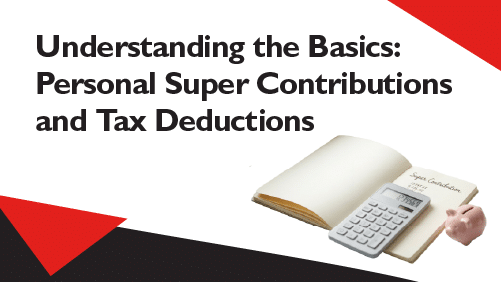
Understanding the Basics: Personal Super Contributions and Tax Deductions
Personal super contributions are voluntary payments you make into your super fund from your after-tax income. You can choose to claim a tax deduction for these contributions to reduce your taxable income, provided you meet certain eligibility criteria and follow ATO requirements.
As of July 1st 2025, the concessional contributions cap, which includes your employer’s super guarantee, any salary sacrifice contributions, and personal deductible contributions, has increased to $30,000 per year.
If your total super balance was below $500,000 on June 30 of the previous financial year, you can also carry forward unused concessional cap amounts for up to five years, potentially letting you make bigger contributions and claim larger deductions in 2026.
There’s also a separate non-concessional contributions cap, which currently sits at $120,000 per year. Non-concessional (or after-tax contributions) come from your take-home pay and can’t be claimed as a deduction because you’ve already paid tax on those funds. However, they help grow your super balance tax-free within the fund.

Eligibility Criteria: Can You Claim a Super Contribution Deduction?
Before claiming a deduction for personal super contributions, make sure you meet these requirements:
- You made a personal contribution to a complying super fund or retirement savings account during the income year.
- You completed and lodged a Notice of Intent to Claim form with your super fund before submitting your tax return (or by the end of the following financial year, whichever comes first).
- You received written acknowledgment from your fund confirming your intent to claim.
Additional eligibility rules include:
- If you’re under 18, you can only claim a deduction if you earned income as an employee or business operator.
- If you’re between 67 and 74, you must satisfy the work test (working at least 40 hours in a 30-day period) or qualify for the work test exemption.
Once your deduction is claimed, your personal contribution becomes a concessional contribution, taxed at 15% within your super fund which is far lower than most individual marginal tax rates.

Tracking Your Caps and Contribution Limits
Keeping on top of your contribution caps helps you avoid paying additional tax on excess amounts. If you exceed the concessional contributions cap, the excess will be added to your assessable income, which could increase your Medicare levy and other tax liabilities.
Meanwhile, exceeding your non-concessional contributions cap can trigger penalty rates or even force you to withdraw excess funds.
It’s especially important to monitor your total super balance if you plan to use the bring-forward rule, which allows you to contribute up to three times the annual limit in advance.

Government Co-Contribution and Tax Offsets
Did you know the government may contribute directly to your super if you qualify as a low- or middle-income earner?
- The government co-contribution offers up to $500 if you make after-tax contributions and meet certain criteria, including earning below the threshold (around $61,000 in 2026).
- The Low Income Super Tax Offset (LISTO) refunds up to $500 of tax paid on your concessional contributions which is automatically added to your super account if you’re eligible.
These incentives are designed to make saving for retirement more achievable while lowering your contributions tax burden. However, remember that co-contributions from the government cannot also be claimed as a deduction.

Common Mistakes People Make When Claiming Super Deductions
Even in 2026, many Australians still make avoidable errors when claiming personal super contribution deductions. Keep an eye out for these red flags:
- Lodging a notice of intent late or failing to obtain written acknowledgment from your fund.
- Accidentally claiming salary sacrifice or employer super guarantee payments as personal contributions.
- Exceeding contribution caps and triggering extra tax.
- Double-claiming contributions across financial years due to poor record-keeping.
To avoid these pitfalls, always cross-check your super statements, intent forms, and tax return data before lodgement.

Why Accurate Super Claims Matter Now More Than Ever
In 2026, Australians are focusing more than ever on tax-effective ways to grow their retirement savings.
With cost-of-living pressures, planning your personal contributions strategically can make a big difference both to your take-home pay and your future financial security.
Making extra contributions before the end of the financial year can help reduce your taxable income, while also ensuring your investment remains in a tax-advantaged environment.
However, with changing ATO deadlines, eligibility criteria, and superannuation contribution caps, even small errors can result in lost deductions or unexpected tax bills.

Partner with Pherrus for Expert Guidance on Personal Super Contributions


Don’t risk a rejected deduction or needless extra tax this financial year.
Whether you need help completing your intent to claim forms, calculating your concessional contributions cap, or managing your voluntary contributions, the experienced team accountants Pherrus can help.
We’ll ensure your personal super contributions are structured for maximum tax efficiency, compliant with current ATO regulations, and tailored to your financial situation.
Ready to get it right this year? Contact Pherrus today to manage, claim, and optimise all your personal super contribution deductions before you lodge your next tax return.

FAQs
How Do I Claim a Tax Deduction for Personal Super Contributions in 2026?
To claim a tax deduction for personal super contributions in 2026, you must first make a personal contribution to your super fund from your after-tax income.
Then, complete and lodge a Notice of Intent to Claim form with your fund before you submit your tax return (or by the end of the following financial year, whichever comes first).
Once your fund acknowledges your notice, you can include the deduction in your return.
Remember, eligible deductions fall under the concessional contributions cap (currently $30,000 for the 2025–26 financial year). To avoid paying extra tax, always confirm how your contributions fit within your limits.
What’s the Difference Between Concessional and Non-concessional Super Contributions?
Concessional contributions come from your pre-tax income, including employer super guarantee, salary sacrifice, and personal deductible contributions which are all taxed at a flat 15% inside your fund.
These contributions reduce your taxable income when you claim a deduction.
On the other hand, non-concessional contributions are made from after-tax income and can’t be claimed as a deduction since you’ve already paid tax on them.
However, they’re tax-free within the fund (up to the non-concessional contributions cap, currently $120,000 per year).
Understanding this difference helps ensure your strategy remains tax-effective and compliant with ATO rules.
Can I Claim a Deduction for Personal Super Contributions if I’m Self-employed or on a Low Income?
Yes, both self-employed individuals and low-income earners can claim a tax deduction for personal super contributions, provided they meet ATO eligibility criteria.
Even if you don’t have an employer paying super guarantee contributions, voluntary super deposits from your after-tax income can be claimed to lower your taxable income.
Additionally, if you earn below the government threshold, you may qualify for the Low Income Super Tax Offset (LISTO) or receive a government co-contribution, both of which help boost your super balance while keeping your overall tax low.
Pherrus can help you identify every available deduction, offset, and incentive to maximise your retirement savings this financial year.