
Table of Contents
As the new financial year begins, thousands of Australian businesses are reviewing their compliance and registration costs. What is the one line item that always draws attention?
ASIC fees.
Each year, the Australian Securities and Investments Commission (ASIC) updates its fee structure, indexing charges to the Consumer Price Index (CPI).
ASIC fees are charges imposed by the Australian Securities and Investments Commission for regulatory functions such as company registration, lodging documents, and maintaining compliance with business regulations.
These fees are paid by the entities ASIC regulates, not by individual consumers or for everyday transactions.
This guide is for Australian business owners, company directors, and financial professionals who need to understand and manage ASIC fees for compliance and budgeting purposes. Staying informed about ASIC fees helps businesses avoid penalties, plan budgets, and remain compliant with Australian regulations.
These updates, which take effect every year on July 1st, impact all registered companies from small family-run proprietary companies to large public corporations and authorised audit companies operating across the financial services sector.
We’ll break down everything you need to know about the latest ASIC fees, their link to the Consumer Price Index, and how Pherrus Financial Services can help your business stay compliant while managing rising costs effectively.

What Are ASIC Fees & Why Do They Increase Each Year?
ASIC fees are government-imposed charges for a range of corporate regulatory services. These include business and company registration, annual review fees, name reservations, and charges for late lodgement or document review.
Every year, ASIC aligns its fees with inflation as reflected in the Consumer Price Index (CPI) from the previous March quarter. This ensures the cost of administering Australia’s corporations and superannuation industry regulation keeps pace with general economic conditions.
Whether you’re registering a new proprietary company, updating company details, or maintaining a regulated superannuation fund, your business will pay fees that reflect any CPI-linked increase.
Key Points About ASIC Fees Indexation:
- Fees are reviewed annually by ASIC.
- Increases take effect on July 1st each year.
- Fees are indexed to the Consumer Price Index (CPI).
- ASIC fees are not subject to GST.
- They apply to a wide range of corporate forms and regulatory activities.

Current ASIC Fee Schedule for 2026
To keep transparency and fairness, ASIC publishes an annual schedule of fees covering all forms, registrations, and company types. While the exact figures may vary slightly year on year, here are the current ASIC fees from July 1st, 2026, adjusted in line with CPI.
Company Name & Registration Fees
| ASIC Service | Fee (as at 1 July 2026) |
| Reserving a company name | $59 |
| Standard company registration | $611 |
| Changing a company name | $474 |
| Deregistering a company | $47 |
| Extending a company name reservation | $59 |
Annual Review & Maintenance Fees
| ASIC Service | Fee (as at 1 July 2026) |
| Annual review fee – proprietary company | $329 |
| Annual review fee – special purpose company | $56 |
| Late Payment Fee 1 (payment within 1 month after due date) | $93 |
| Late Payment Fee 2 (payment more than 1 month after due date) | $383 |
Business Name Fees
| ASIC Service | Fee (as at 1 July 2026) |
| Business name registration for 1 year | $42 |
| Business name registration for 3 years | $98 |
| The difference between 1-year and 3-year registrations lies in the cost efficiency and duration of your business name’s validity. |

Which Types of Companies Pay ASIC Fees?
ASIC fees apply broadly across the corporate landscape. Whether you are newly registering your business or managing an established entity, understanding which structure applies to your company type helps ensure accurate payment and compliance.
1. Proprietary Companies
A proprietary company (Pty Ltd) is the most common structure for Australian businesses. These privately held corporations pay annual review fees and penalties for late lodgement if forms are not lodged by the due date.
2. Public Companies
A public company has higher ASIC compliance requirements due to its size, public investment, and financial obligations under the Corporations Act 2001. These businesses also face indexed review fees and must ensure audits are conducted by an Authorised Audit Company.
3. Special Purpose Companies
Defined under section 19, paragraph (3) of the Superannuation Industry (Supervision) Act 1993, a special purpose company acts solely as trustee for a regulated superannuation fund. It must operate under the sole purpose test, ensuring its members receive only retirement or related benefits, and that property distribution and company income remain restricted.
4. Foreign Companies
A foreign company operating in Australia must register with ASIC under the Corporations Act, pay applicable review fees, and comply with specific audit and reporting requirements. These entities may also be subject to additional late fees or review charges depending on their business operations.

Late Fees, Lodgement, and Compliance
Compliance with ASIC’s deadlines is critical. Missing a due date for fee payment or report submission can result in additional costs.
ASIC Late Fee Structure:
- A Late Fee (Tier 1) of $93 applies if payment is made within 1 month after the due date.
- A Late Fee (Tier 2) of $383 applies if payment is made more than one month after the due date.
If your company fails to pay the annual review fee or lodge required documents on time, ASIC has the authority to deregister the entity. Avoiding late lodgement is vital to maintaining your company’s good standing and reputation.
Pherrus can assist companies in managing ASIC filing deadlines, ensuring your forms are correctly lodged and your company’s compliance history remains clean.

The Consumer Price Index (CPI) and Its Role
The Consumer Price Index (CPI) measures inflation and is published quarterly by the Australian Bureau of Statistics. ASIC uses CPI data from the previous March quarter to determine how much fees will increase on 1 July each year.
For example, if the CPI rose by 4% over the previous March quarter, fees such as company registration and annual review charges would see a corresponding increase.
This annual indexation ensures that ASIC’s regulatory fees remain aligned with economic inflation while maintaining consistency and transparency.
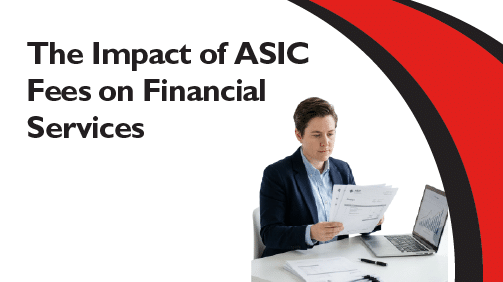
The Impact of ASIC Fees on Financial Services
The financial services industry including accountants, auditors, licensed advisers, and regulated superannuation funds, feel the impact of ASIC’s yearly fee adjustments acutely.
For financial firms, ASIC review fees, audit obligations, and ongoing compliance tasks are built into annual administrative budgets. When ASIC increases fees through CPI indexation, the cost of supervision and compliance for these businesses also rises.
Examples of affected areas include:
- Annual review fees for authorised entities
- Registration costs for new proprietary and public companies
- Review of regulated superannuation fund structures
- Audit costs for authorised audit companies under ASIC supervision
- Late fees applied to common filings and commonly lodged documents
Many financial service providers choose to work with Pherrus for ASIC compliance management, to keep fees predictable and avoid late penalties through proactive planning and electronic lodgement systems.

Avoiding Late Lodgement: Practical Steps
To prevent late fees and ensure smooth company supervision, Pherrus recommends implementing a compliance calendar that includes reminders for all ASIC obligations.
Here are several practical compliance strategies:
- Review your company’s details regularly through the ASIC online portal.
- Pay all annual review fees before the due date.
- Keep digital copies of your commonly lodged documents, such as financial statements and officer updates.
- Appoint a company secretary or financial services adviser to oversee ASIC communications.
- For special purpose companies and superannuation trustees, ensure all reporting complies with the Corporations Act and Superannuation Industry (Supervision) Act.
- Partner with Pherrus to automate reminders and handle lodgements professionally.
By partnering with Pherrus, businesses can avoid unnecessary fines, maintain compliance, and plan for CPI-driven increases in ASIC fees each financial year.

Authorised Audit Companies & Regulatory Requirements
An Authorised Audit Company plays a crucial role in ensuring corporate transparency. Under the Corporations Act 2001, certain entities such as public companies, foreign companies, and special purpose trustees are required to have their financials audited by an ASIC-registered auditor.
ASIC assures that authorised auditors possess the required qualifications and adhere to CPI-adjusted supervision and compliance fees. For companies under the superannuation industry, since these entities must satisfy the sole purpose condition, compliance with ASIC’s audit regulations becomes even more essential.
Failure to engage an authorised audit company, or failure to pay applicable review fees, could lead to late lodgement penalties, investigations, or deregistration.
Through Pherrus, you can coordinate your ASIC reporting, financial audits, and annual review obligations efficiently which saves valuable time while ensuring regulatory compliance.

How Increasing ASIC Fees Affect Australian Businesses
ASIC’s annual fee review has tangible implications for cash flow and budgeting across different business structures.
For small companies, incremental CPI increases can accumulate over time, especially when combined with annual reviews, renewals, and form lodgement fees. For large corporations and financial service entities, the total impact can be significantly higher.
Key effects include:
- Higher administrative costs per year.
- Greater importance of budgeting for ASIC annual reviews.
- Potential cash flow disruptions due to unplanned late fees.
- The need for professional financial oversight to manage compliance efficiently.
Working with a strategic financial partner like Pherrus Financial Services ensures that these obligations are handled smoothly with expert oversight of your ASIC, ATO, and other financial regulatory requirements.

Staying Informed & Compliant: Why Choose Pherrus
At Pherrus Financial Services, we understand that ASIC compliance can feel complex and costly especially with annual fee increases, CPI-based reviews, and new reporting obligations introduced each 1 July.
Our expert team helps businesses across Australia manage their ASIC fees, ensure on-time lodgements, and navigate the Corporations Act and regulations effectively.
Whether you’re a sole trader registering a business name, a foreign company expanding into Australia, or a large organisation balancing superannuation fund responsibilities, Pherrus provides the expertise to keep your operations compliant and cost-efficient.
Here’s how Pherrus can help you:
- ASIC compliance and registration support.
- Lodgement tracking and annual reminders.
- Review of CPI-linked fees impacting your business.
- Strategic tax planning and entity restructuring.
- End-to-end accounting for public and proprietary companies.
With ASIC’s indexed fees expected to continue rising year after year, working with an experienced advisory team makes a real difference in keeping your compliance obligations manageable.

Partner with Pherrus: Manage ASIC Fees with Confidence


Navigating ASIC’s complex fee structure doesn’t have to be stressful. With every new financial year bringing CPI-indexed increases, the right strategy can help your business stay compliant, avoid penalties, and plan effectively for future growth.
At Pherrus Financial Services, our dedicated accountants specialise in guiding businesses through ASIC regulations, annual reviews, and cost management. We align financial compliance with your broader business goals which helps you focus on growth, not paperwork.
Contact Pherrus today to learn how we can assist with your ASIC fees, registration, tax, and corporate compliance. Expert financial guidance starts here.

FAQs on ASIC Fees
How Often Do ASIC Fees Change?
ASIC fees are indexed annually, typically on 1 July, in alignment with the Consumer Price Index (CPI) from the previous March quarter.
Are ASIC Fees Subject to GST?
No. ASIC fees are not subject to GST.
What Happens if I Miss My ASIC Payment Due Date?
Failing to pay your annual review or other ASIC fees on time results in late fees:
- $93 if within 1 month,
- $383 if over 1 month late.
Continued failure may result in deregistration.
What Fees Apply When Registering a New Company?
Standard company registration fees begin at approximately $611, including the reservation and registration of your company or business name.
How Are Regulated Superannuation Funds Affected by ASIC Fees?
A regulated superannuation fund must appoint a special purpose company as trustee. These entities pay reduced annual fees ($56) and must comply with ASIC’s reporting, CPI indexation, and the sole purpose provisions under the Supervision Act.
Where Can I Check Current ASIC Fees?
The official ASIC fee schedule is available on ASIC’s website, listing all charges for the registration, review, and late lodgement of company forms and documents.
Do ASIC Fees Apply to Cryptocurrency Transactions?
No, ASIC does not charge a direct fee on everyday cryptocurrency transactions like purchases, sales, or swaps. Cryptocurrency exchanges may impose their own trading or withdrawal fees, and such transactions are subject to taxation by the Australian Taxation Office, not ASIC.